Set Priority by rules in Azure DevOps
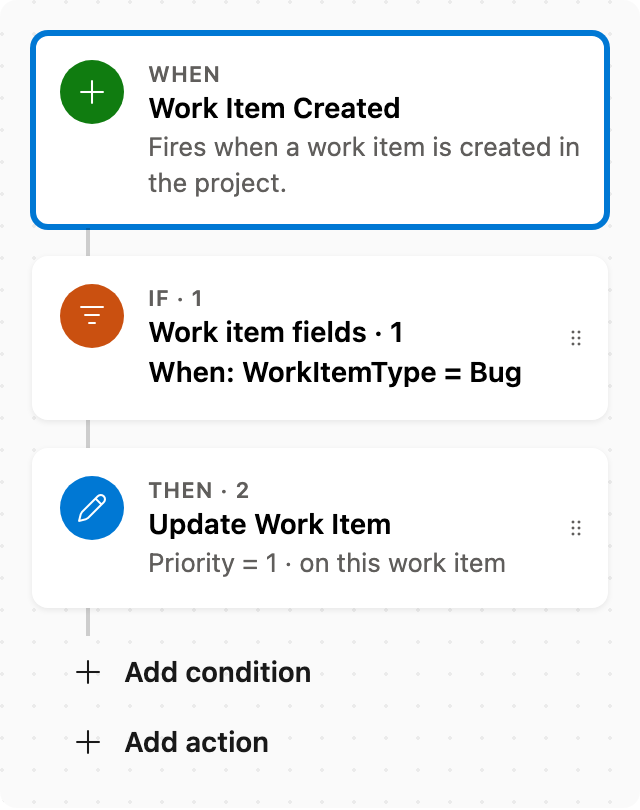
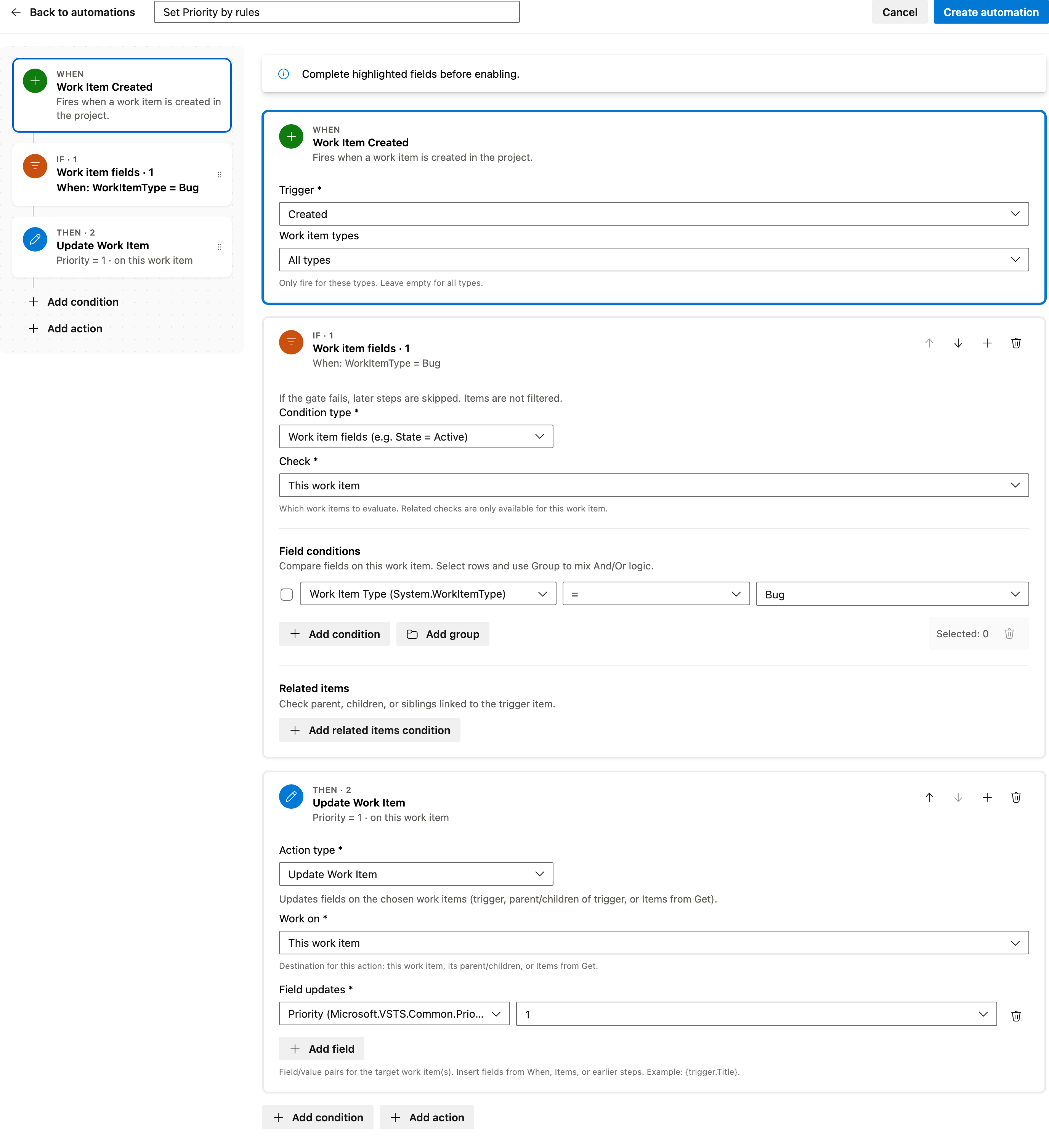
When a work item is created as a Bug, set Priority to 1 in Azure DevOps.
This guide will walk you through setting up the automation, including configuring conditions and priority values. You'll be able to customize these settings to match your project's specific requirements.
Prerequisite: Install Automations App on your Azure DevOps organization
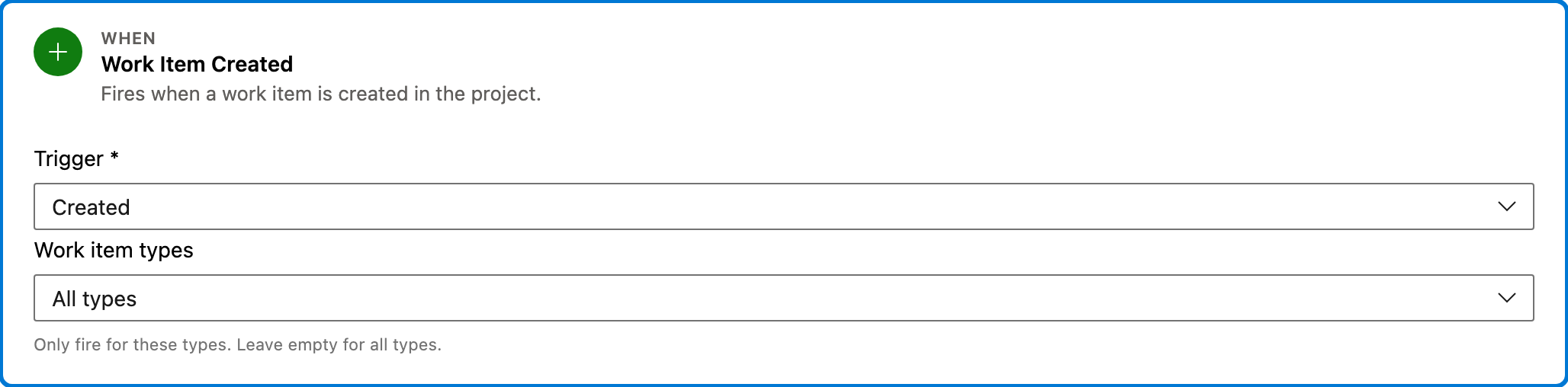
Trigger — Work Item Created
This trigger activates the automation whenever a new work item is created in the project. It does not filter by work item type, so all new work items will initially trigger the flow.
Configured in this template
- Work item types: all (no filter)
You can customize
- Filter specific work item types if you only want to trigger on certain types.
Condition — Work item fields
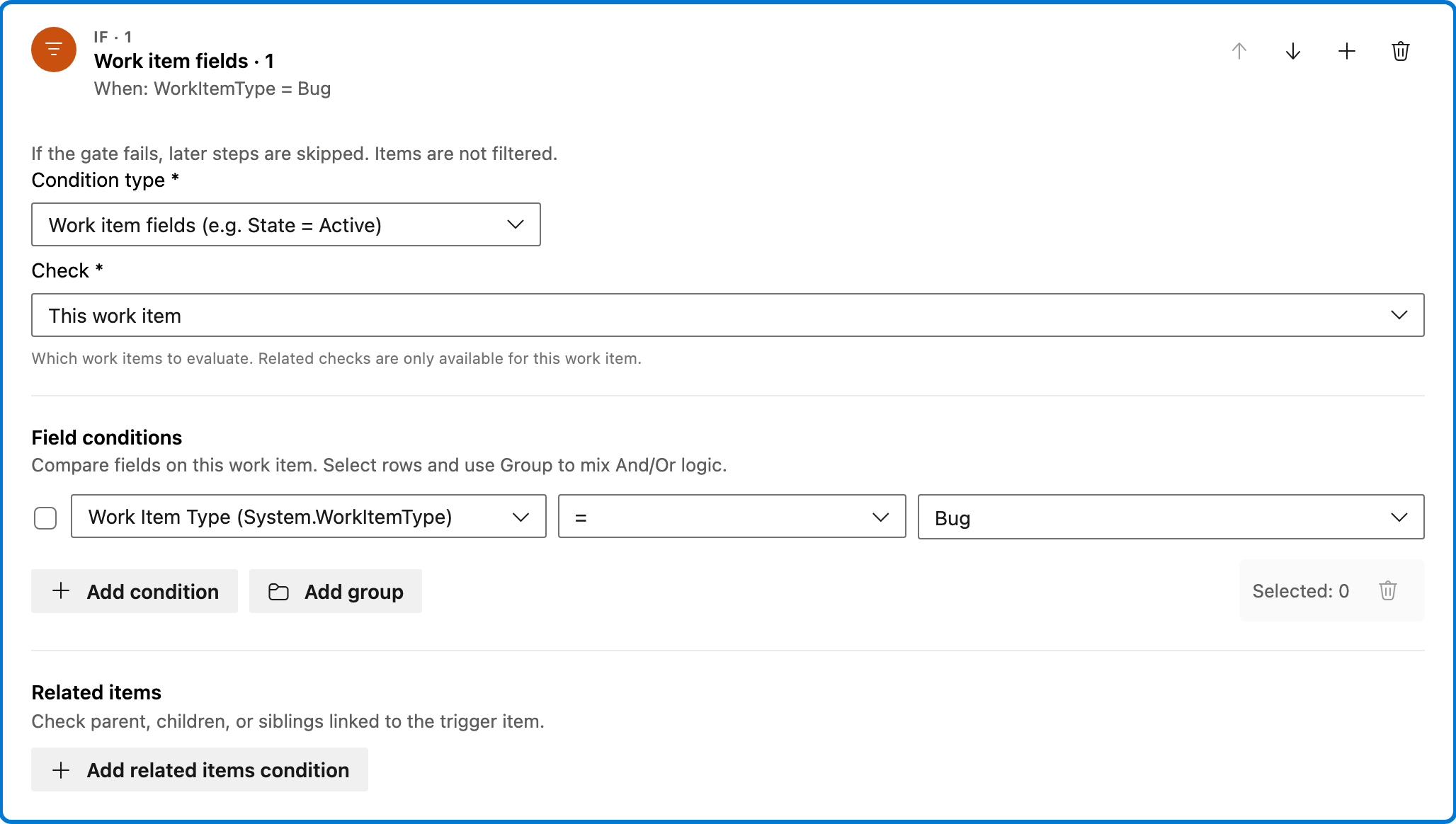
This condition checks the fields of the newly created work item. It ensures that the automation proceeds only if the work item type is 'Bug'. All specified conditions must match for the flow to continue.
Configured in this template
- Check: This work item
- Require: All of Items
- Field conditions: Work item type = Bug
- Match logic: All conditions must match (AND)
- Related work item conditions: (none)
You can customize
- Add more field conditions if you need to check additional criteria.
- Change the work item type to trigger on different types.
Action — Update Work Item
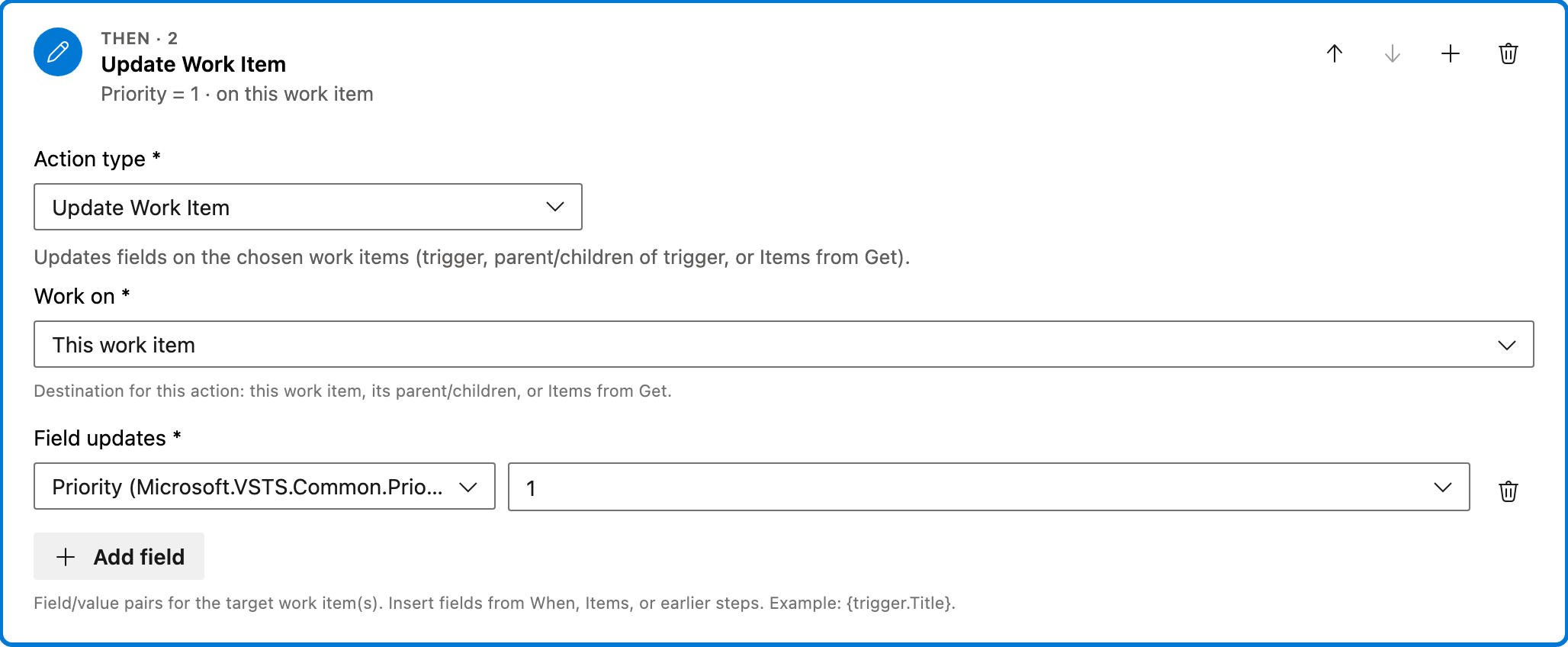
This action updates the Priority field of the work item to 1. It applies to the work item that triggered the flow, ensuring that bugs are prioritized appropriately.
Configured in this template
- Work on: This work item
- Field updates: Priority = 1
You can customize
- Change the Priority value if your project uses a different priority scheme.
- Update additional fields if needed.
Full automation
Common questions
How do I set Priority by rules in Azure DevOps?
What fields are required to enable this automation?
Can I change the work item type that triggers this automation?
How can I test this automation?

Visual Studio Marketplace
Automations
Automate Azure DevOps workflows with triggers, actions, conditions, and scheduled rules.
Other Work Items templates in Automations.
Auto assign new work items
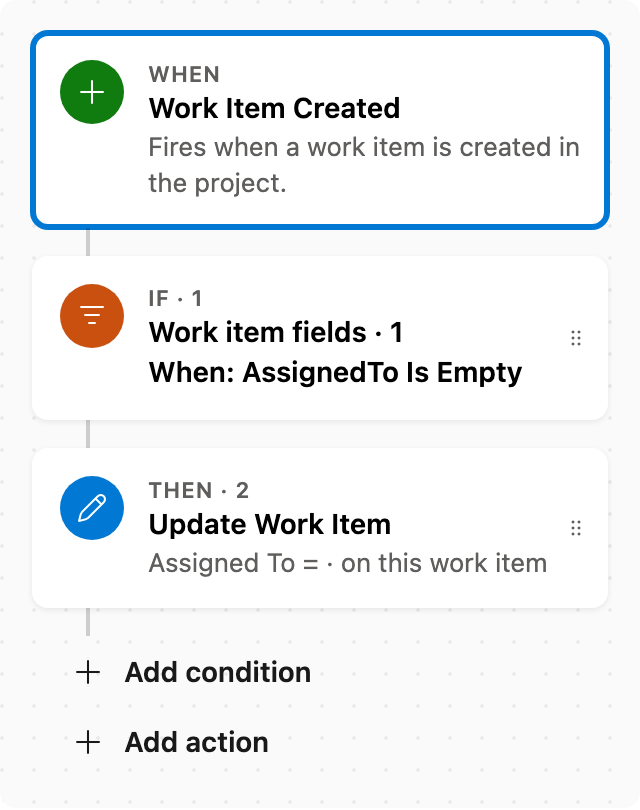
When a work item is created with no assignee, set Assigned To. Skips items that already have someone assigned.
Add comment after status change
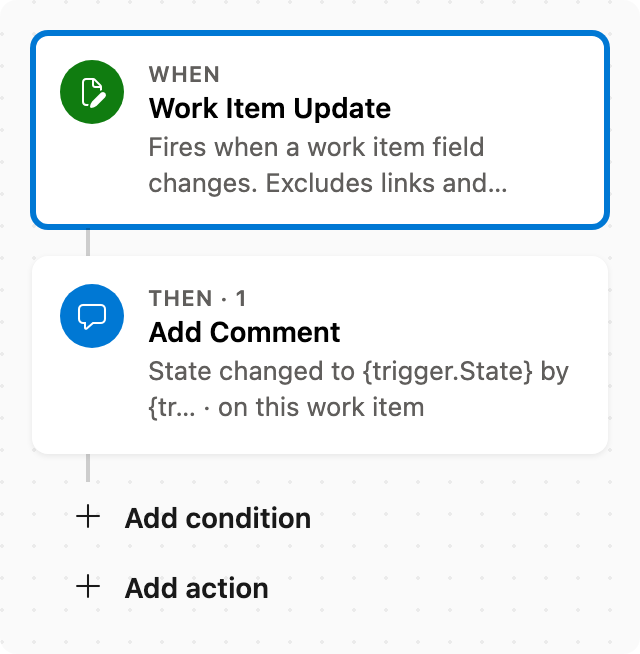
When State changes, add a comment naming who changed it and the new state.
Auto tag new work items
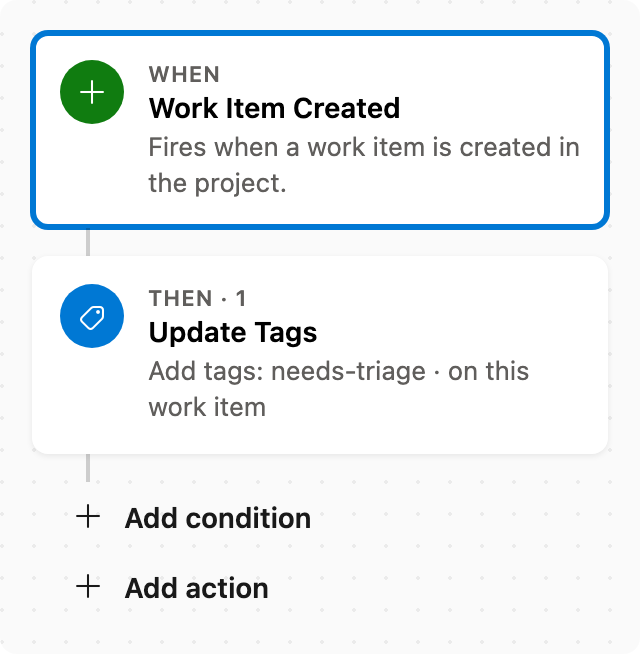
When a work item is created, add tags without removing existing ones.
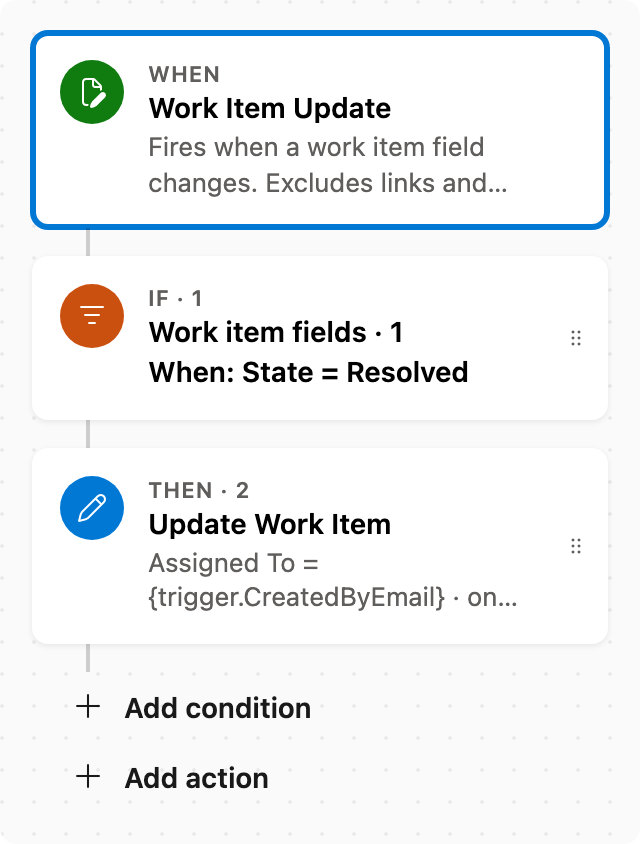
Reassign to creator when resolved
When State changes to Resolved, assign the item to whoever created it (typical verification). Scrum and Basic have no Resolved state — this only fires when the type has one.